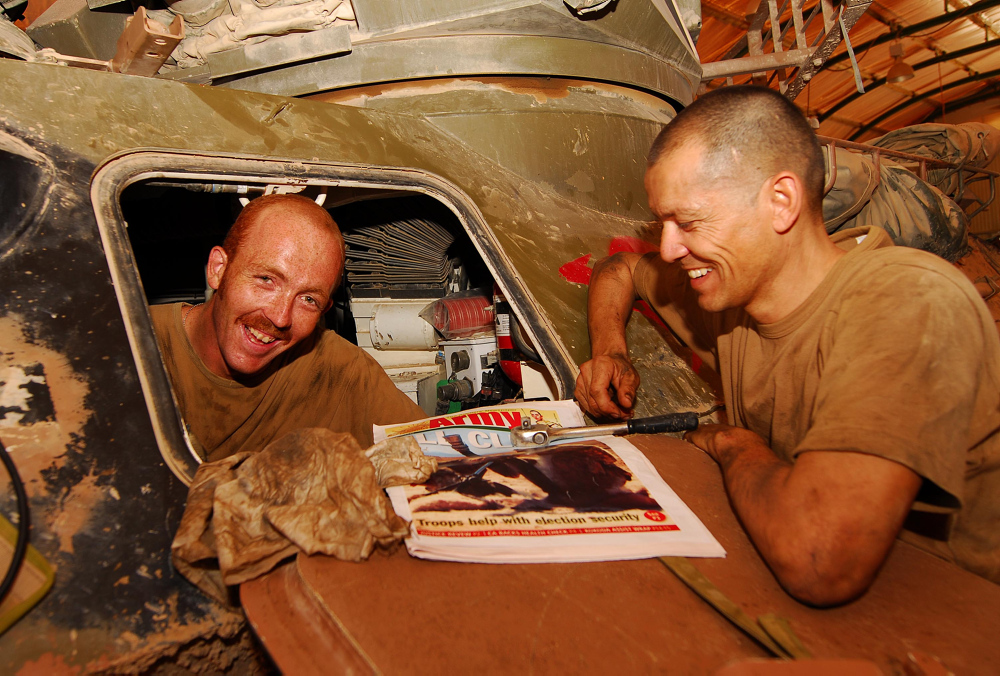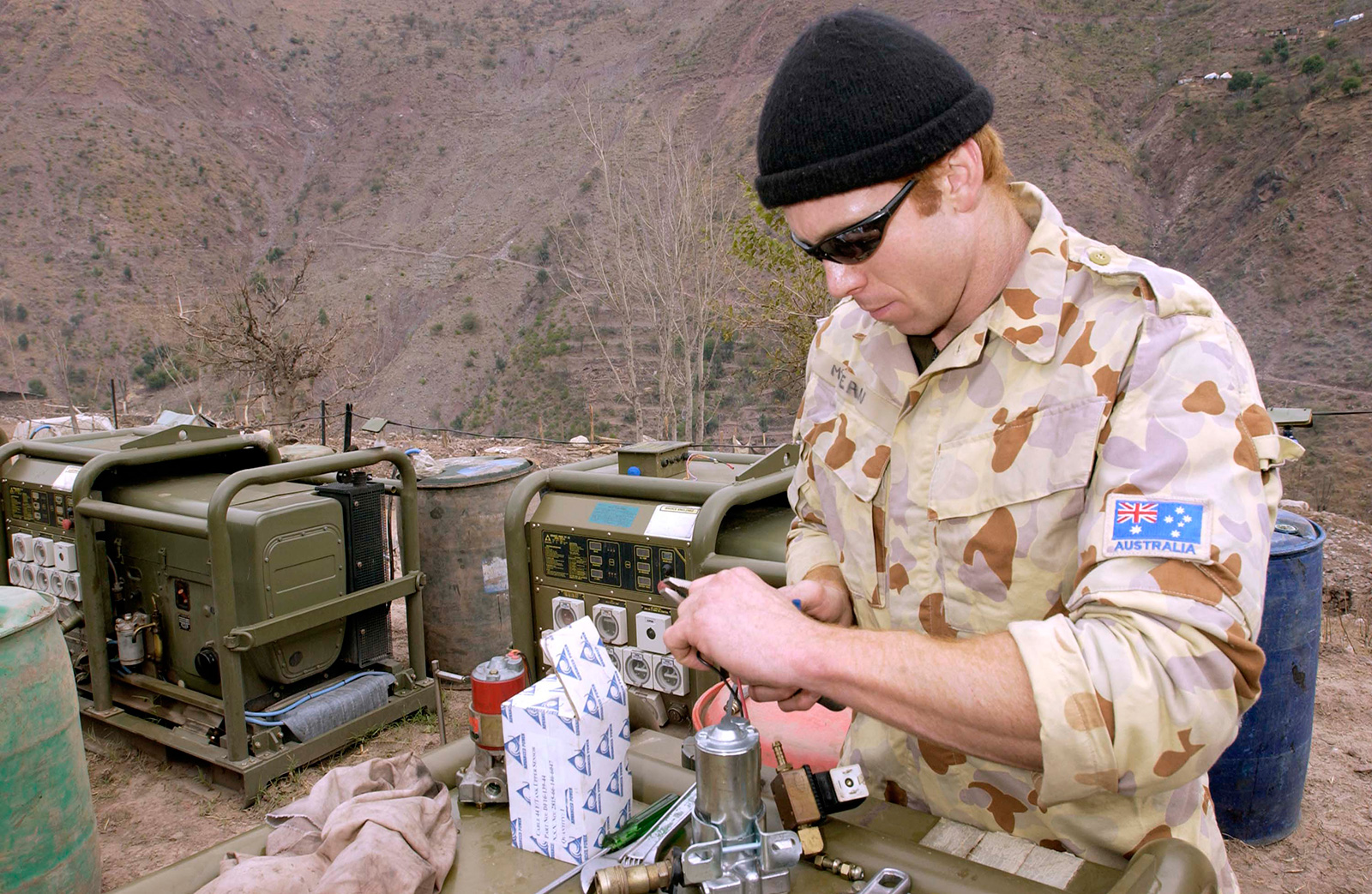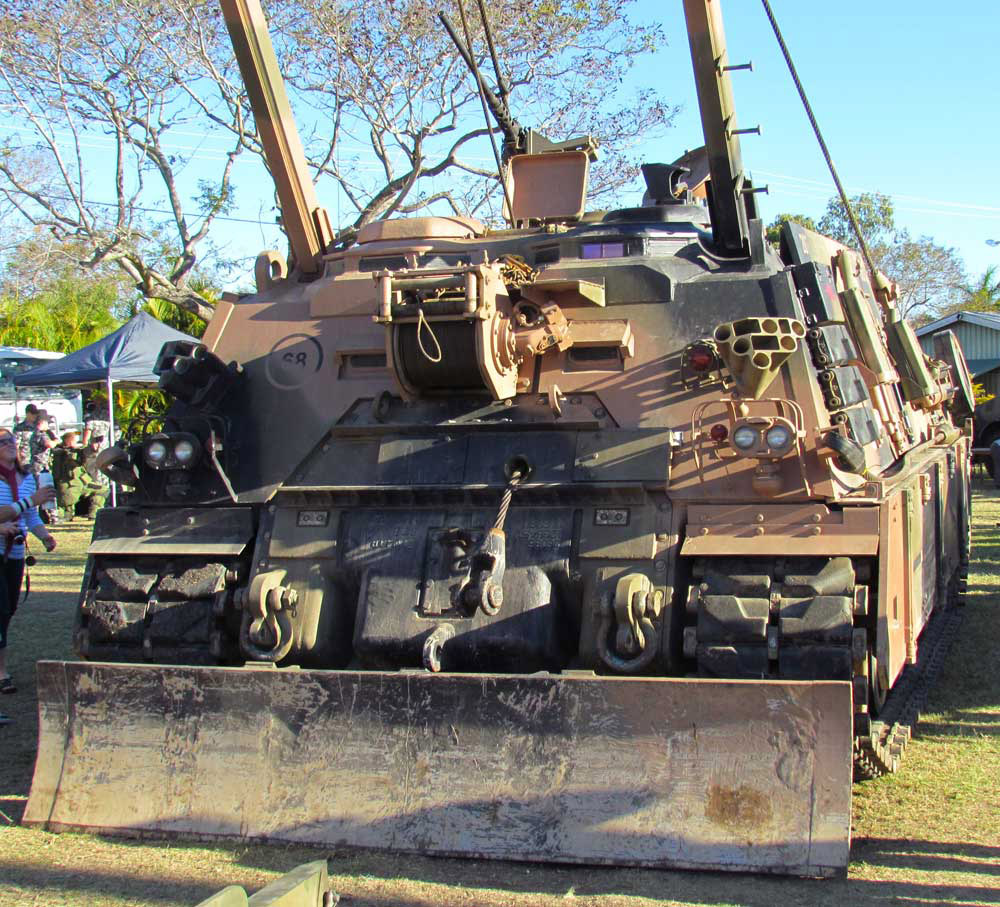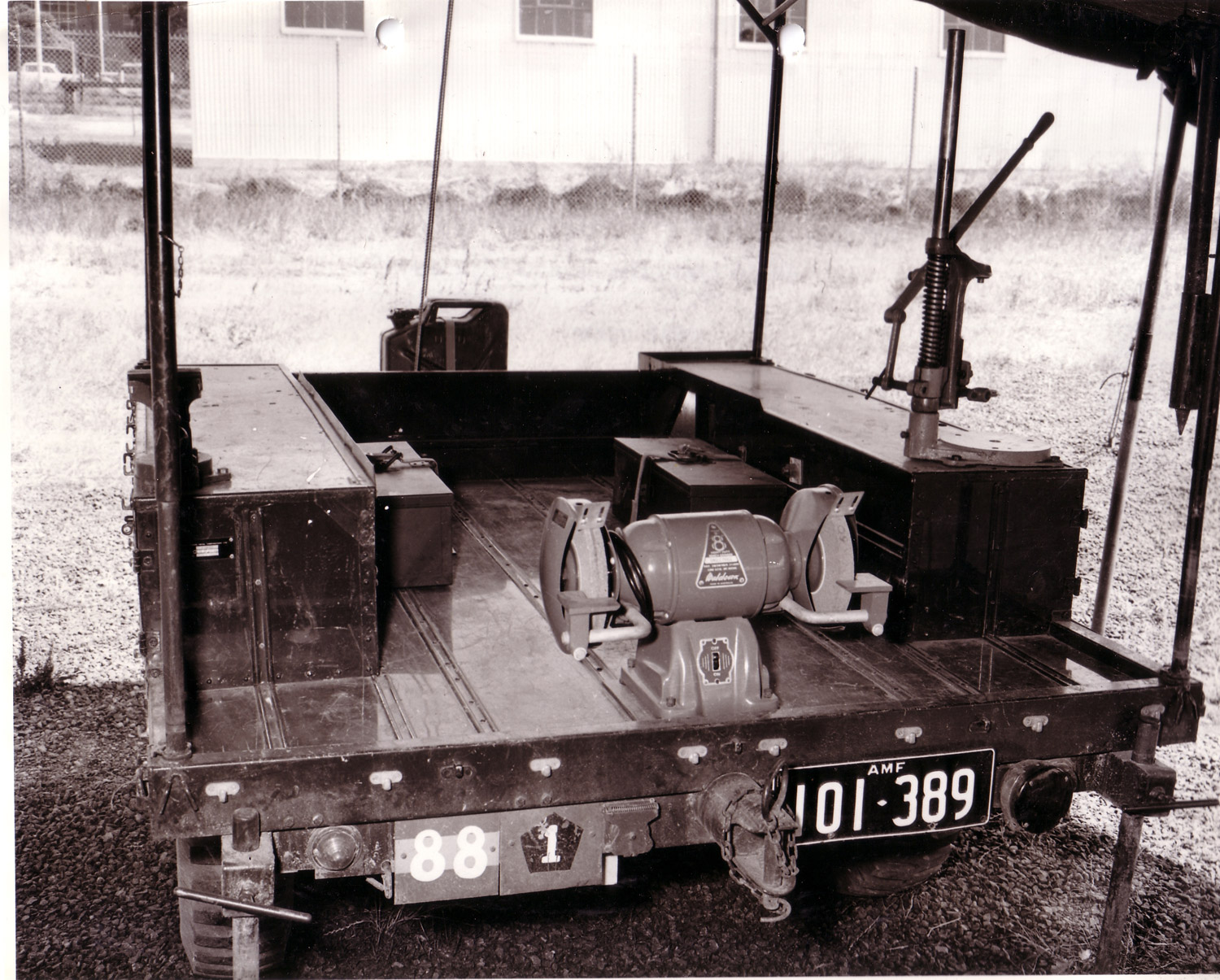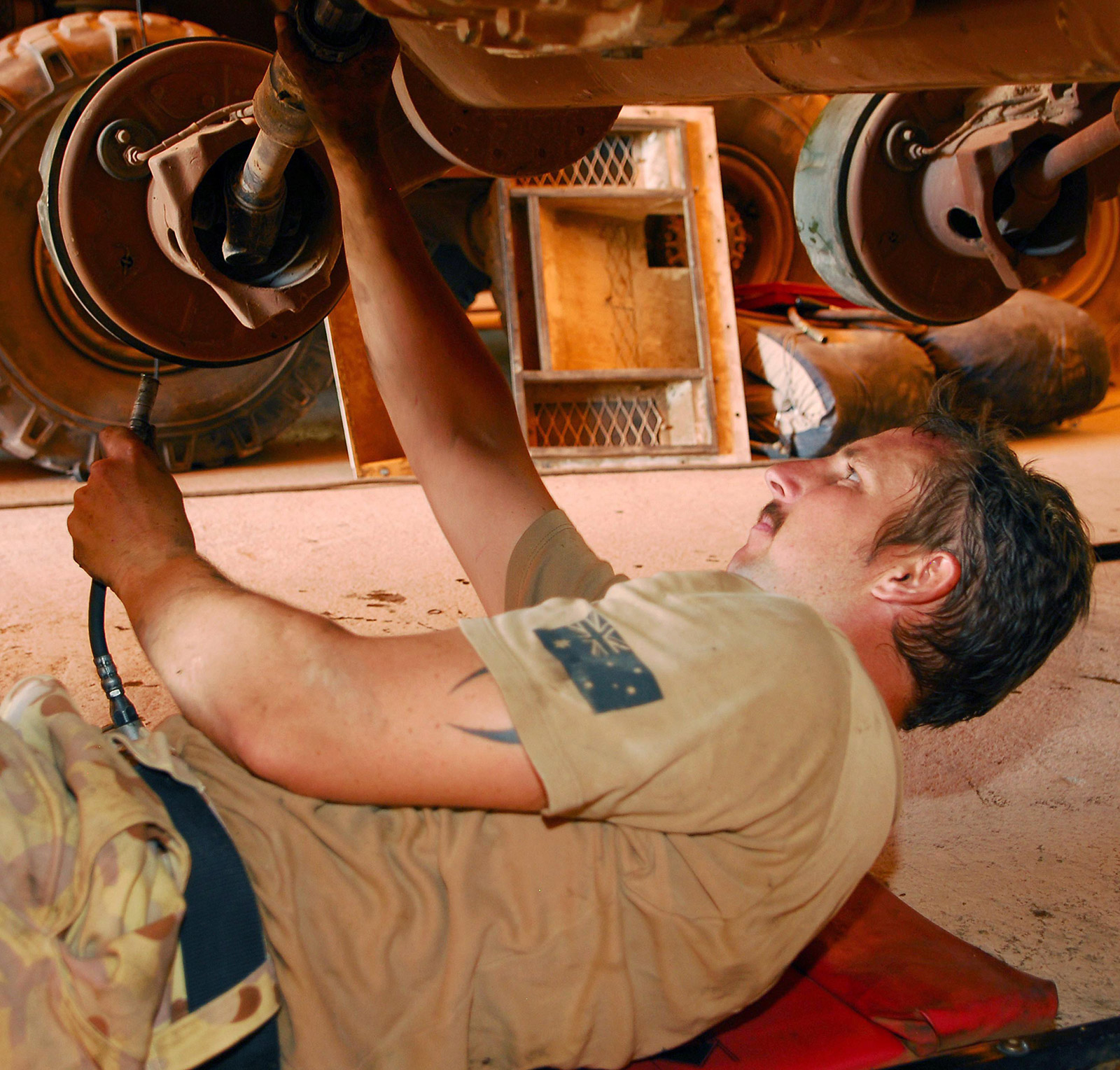


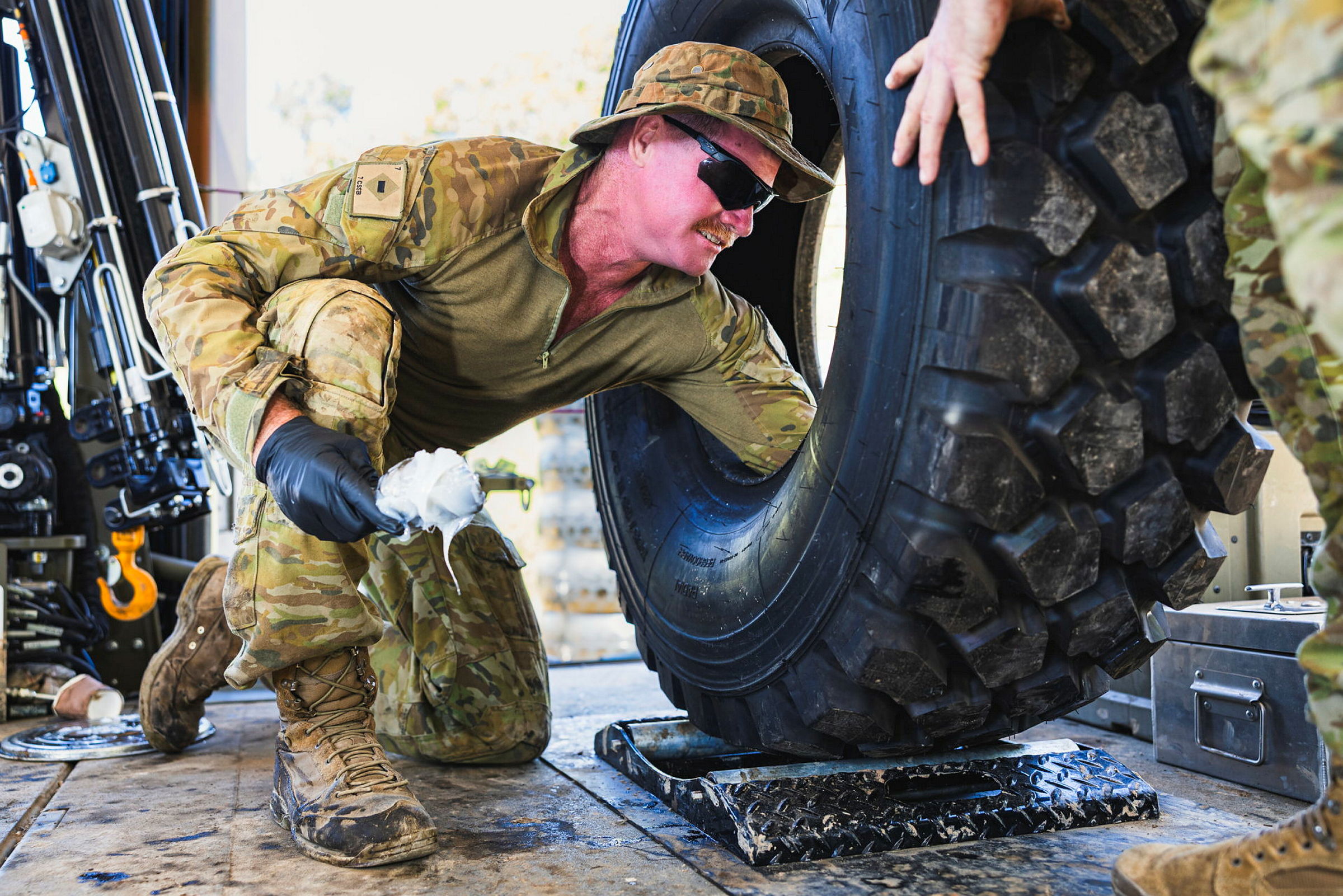
Above: A soldier from the 7CSSB applies lubricant to a vehicle tyre in preparation for fitting within the Tyre Changing Station during Exercise POZIERES RUN at Shoalwater Bay Training Area, Queensland. WATCH THE VIDEO HERE
Exercise POZIERES RUN is the 1st (Australian) Division’s premier Warfighter Field Training Exercise (FTX), designed to train and rehearse divisional headquarters elements, formations, and direct command units in the planning, coordination, and conduct of land operations as part of a combined joint force. The exercise focuses on building readiness, strengthening command and control, and integrating combat capabilities across the force.
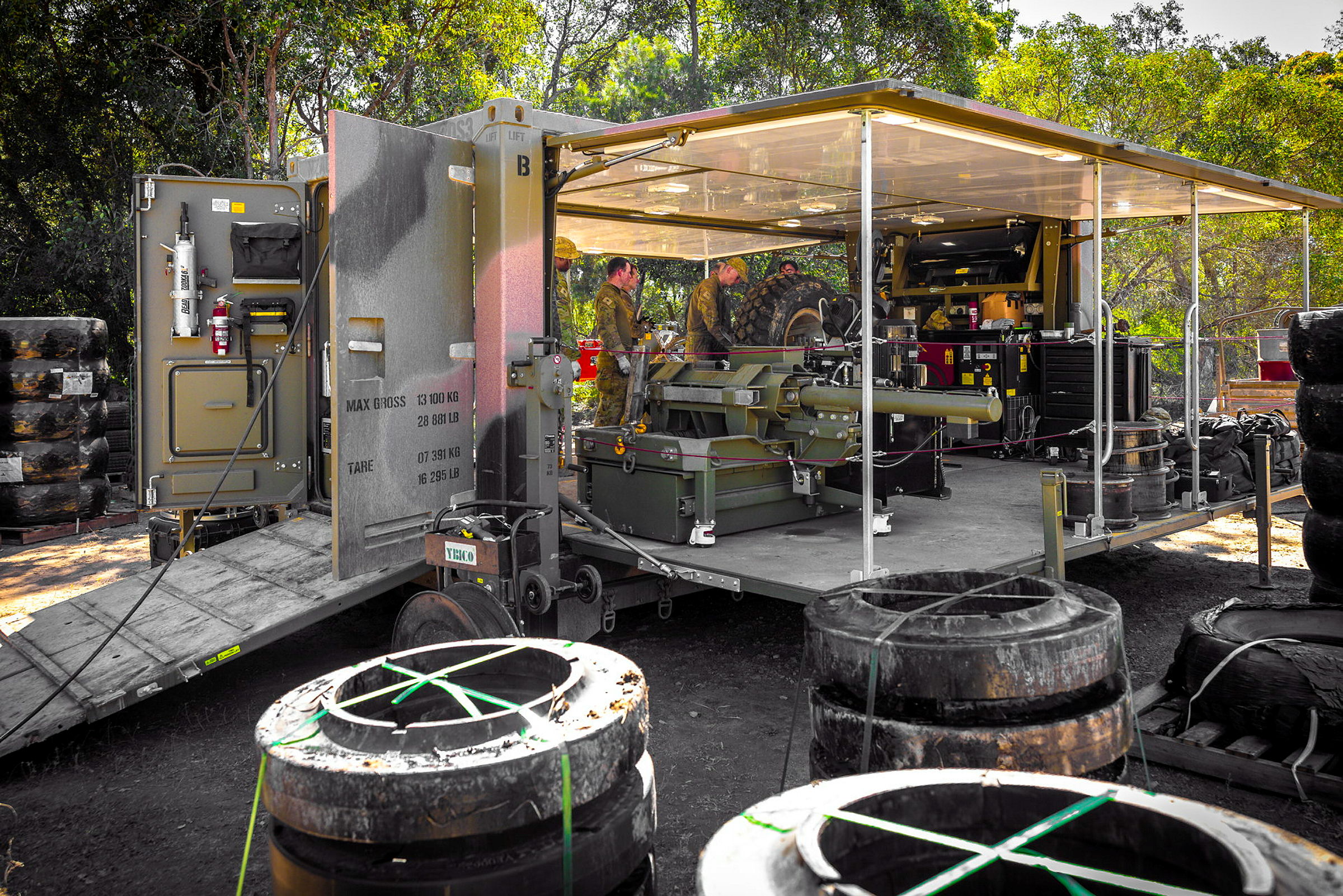
Above: Soldiers from the 7th Combat Service Support Battalion conduct vehicle tyre maintenance using a deployable Tyre Changing Station during Exercise POZIERES RUN at Shoalwater Bay Training Area, Queensland. WATCH THE VIDEO HERE
“It is a field Beaurepaires,” said a soldier joining the queue to service a flat tyre at the tyre-changing station operated under field conditions for the first time during 1 Div’s Exercise Pozieres Run in August.
It was barely set up at the entrance to 7 Bde’s vehicle camp in the Shoalwater Bay Training Area when units began arriving with worn and punctured tyres.
The new Defence capability enables the replacement of tyres and run-flat inserts for a variety of ADF vehicles.
The unit incorporates a tyre-changing machine, wheel balancer, run-flat press, tyre inflation cage, air compressor and associated tools.
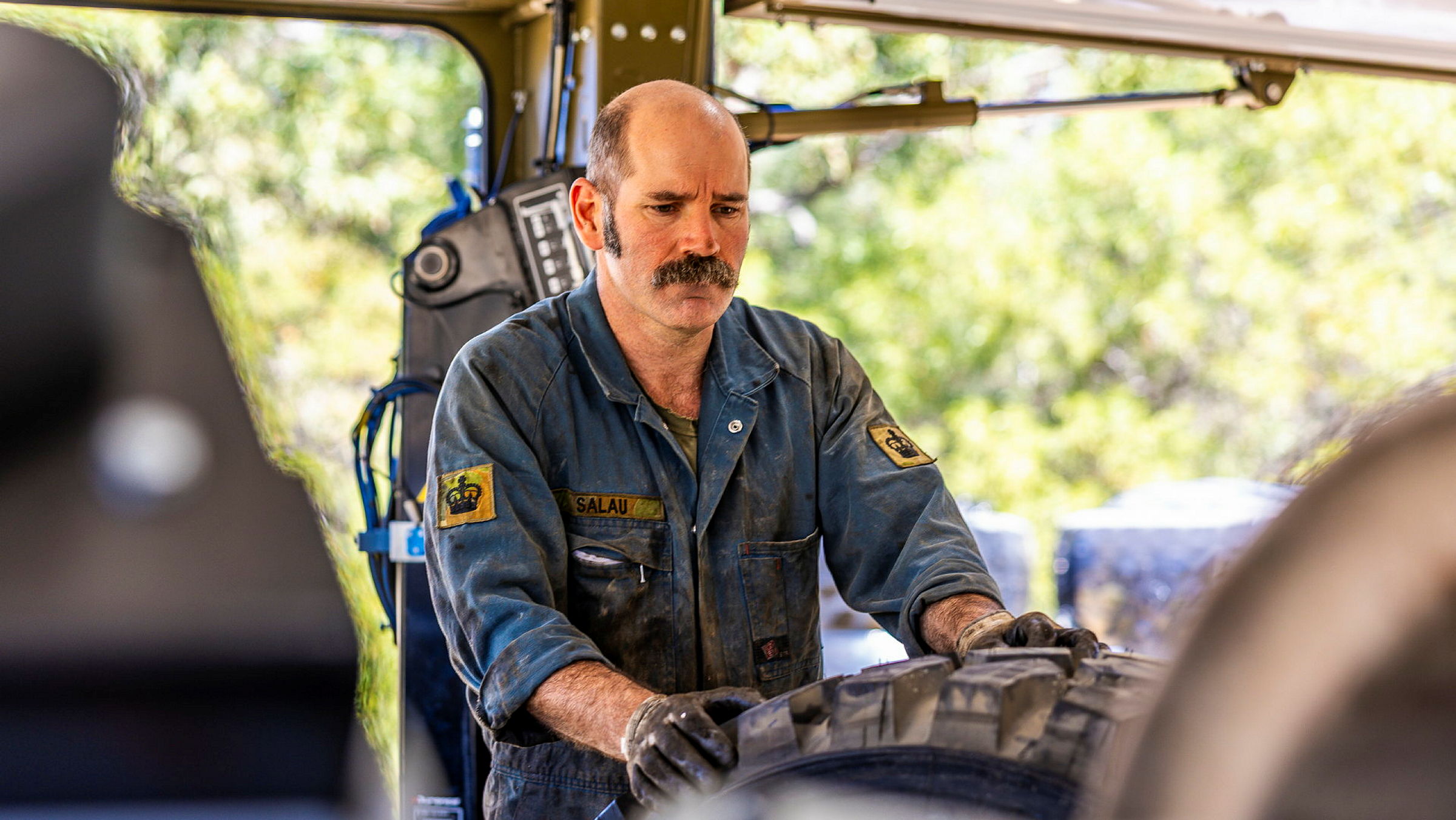
Above: WO2 Shayne Salau, from Vehicle Platoon, 7CSSB, prepares a tyre for the installation of a wheel rim using the Tyre Changing Station during Exercise POZIERES RUN at Shoalwater Bay Training Area, Queensland.
Artificer Sergeant Major WO2 Shayne Salau, of Vehicle Platoon, 7CSSB, said the new equipment was introduced into service at the start of the year.
“It can service most of our fleet, from G-Wagons, MHC from 40M up to HX81, 45M and 42M recovery vehicles, ASLAVs, Bushmasters, PMV-Ls, Boxers and M777s, and it also has the capacity to change plant equipment tyres," WO2 Salau said.
“We did a lot of work prior to the exercise getting the tyres ready. However, there is still a very limited number of people qualified on the equipment at the moment.
“We’ve taken the opportunity to familiarise as many people with the platform as we can.”
WO2 Salau said it shortened the supply timeline for replacement tyres or repairs, with the nearest civilian contractors at Mackay or Brisbane.
Article adapted courtesy of information and photographs supplied by Defence
4. Huntsman tested in the field - Townsville
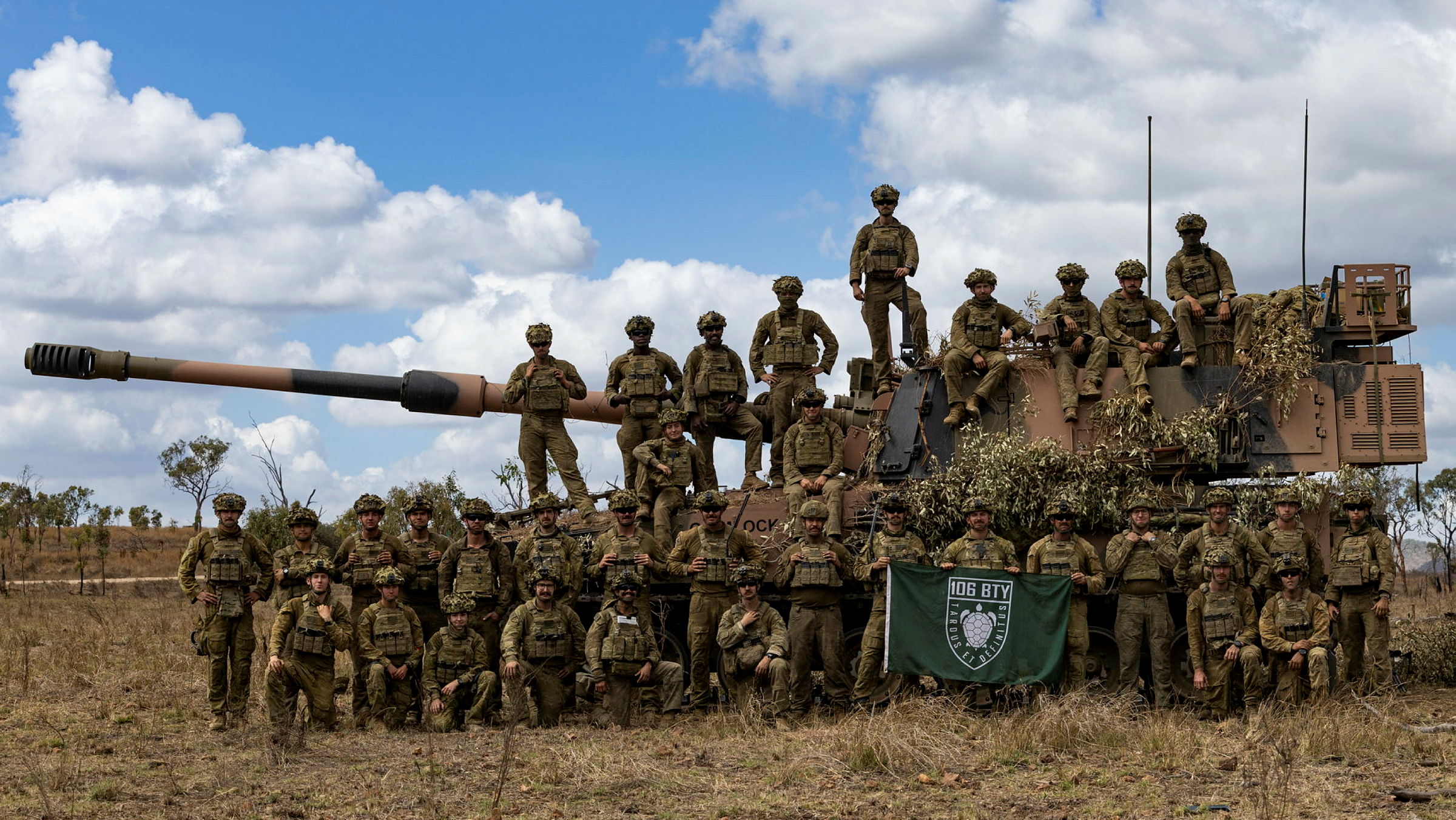
Above: Soldiers from the 4th Regiment, Royal Australian Artillery, 106 Battery, after conducting an AS9 live-fire serial as a part of Exercise Pozieres Run, at Townsville Field Training Area, Queensland.
The Australian-made AS9 Huntsman made its debut in the field, deployed for the 1st (Australian) Division’s premier warfighter Exercise Pozieres Run at Townsville Field Training Area.
The self-propelled howitzer, a protected mobile artillery system, represents an uplift in capability and fire power, continuing Army’s transformation into a modern integrated fighting force.
3 Bde crews fully tested its warfighting capability at the exercise in a series of realistic integrated activities.
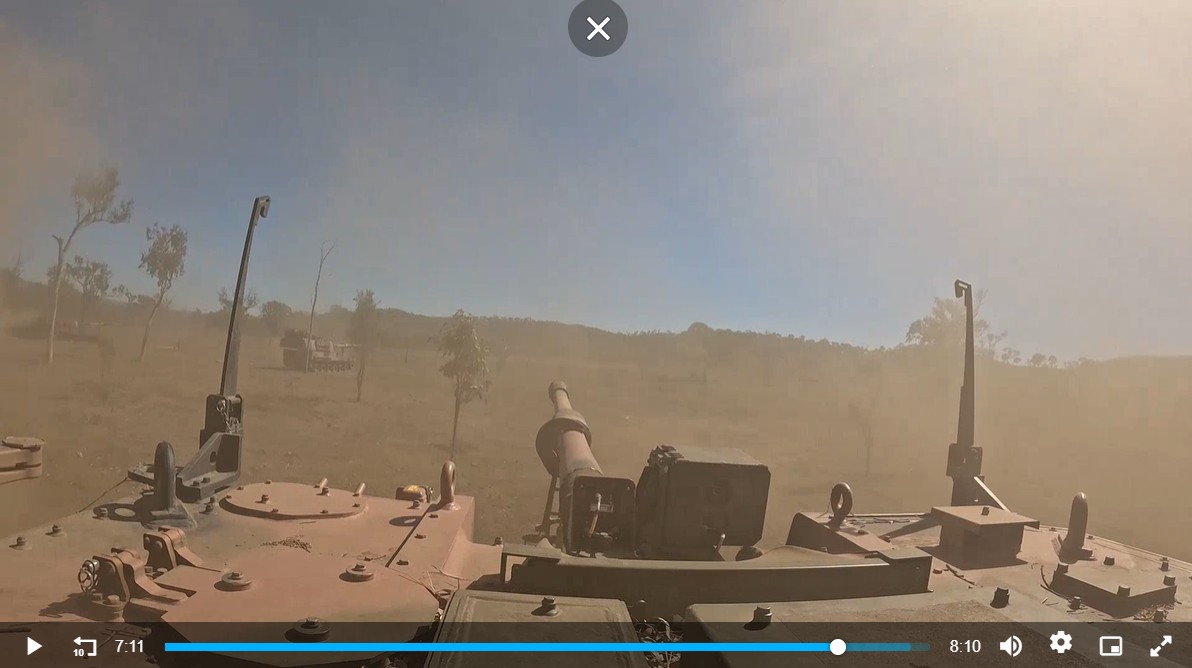
Above: Australian Army AS9 Huntsman Self-Propelled Howitzers from the 4th Regiment, Royal Australian Artillery conduct a live-fire serial as a part of Exercise Pozieres Run, at Townsville Field Training Area, Queensland.
CO 4RAA Lt-Col Simon Frewin said it was a game-changer for the regiment and as a single fighting vehicle, as opposed to a towed gun, gave commanders more combat options.
“It’s an incredible piece of equipment. It’s loud, faster in and out of action, and can range a long way and has taken a huge leap in the capabilities for this brigade,” he said.
“It comes out of a hide to a firing position in seconds, fires off rounds faster than the M777, and moves very quickly back into a hide, and that means if an enemy does identify us, they are unable to respond in time before the AS9 has already moved to a new position.”
Article adapted courtesy of information and photographs supplied by Defence
RAEMUS Rover - Cracker of a start at the Don River Dash - Bowen
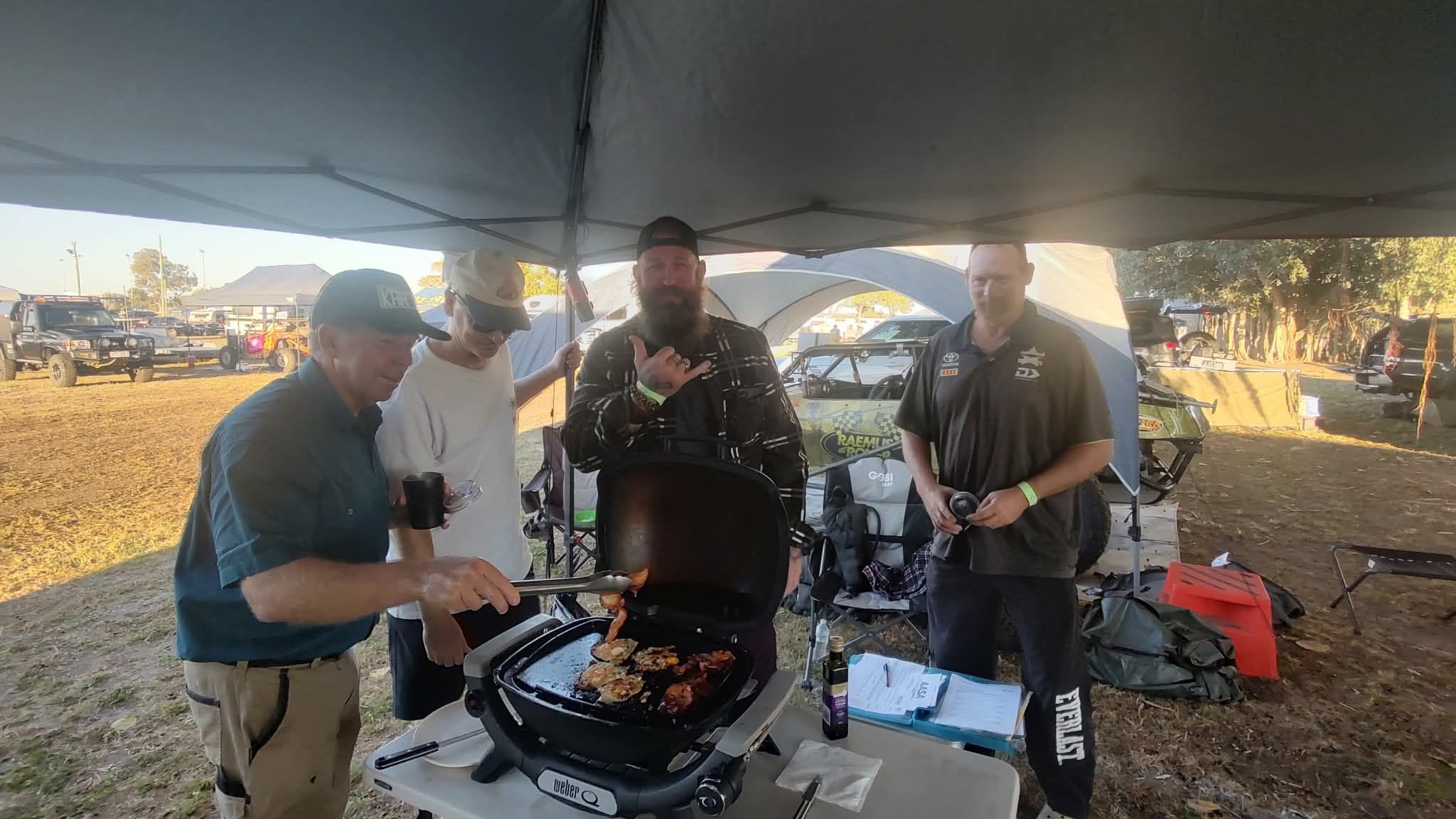
The RAEMUS Rover team enjoyed a cracker of a start to the 2026 Custom Lithium Don River Dash, with its trackside veteran program once again bringing veterans together through motorsport, teamwork and plenty of off-road action. Held at Bowen from 4–6 September, the event provided another great opportunity for participants to reconnect, get involved and experience the benefits of the program’s unique form of “adrenaline therapy”.
A huge thank you goes to Michael Zacka from King Shock Australia, David Loughnan, Ash and Kev from @Hammerdown motorsports racing, Richard Tassin and Custom Lithium with Grant Denyer. Their time, generosity and enthusiastic support ensured the veterans received a memorable trackside experience at one of Queensland’s most exciting off-road racing events.
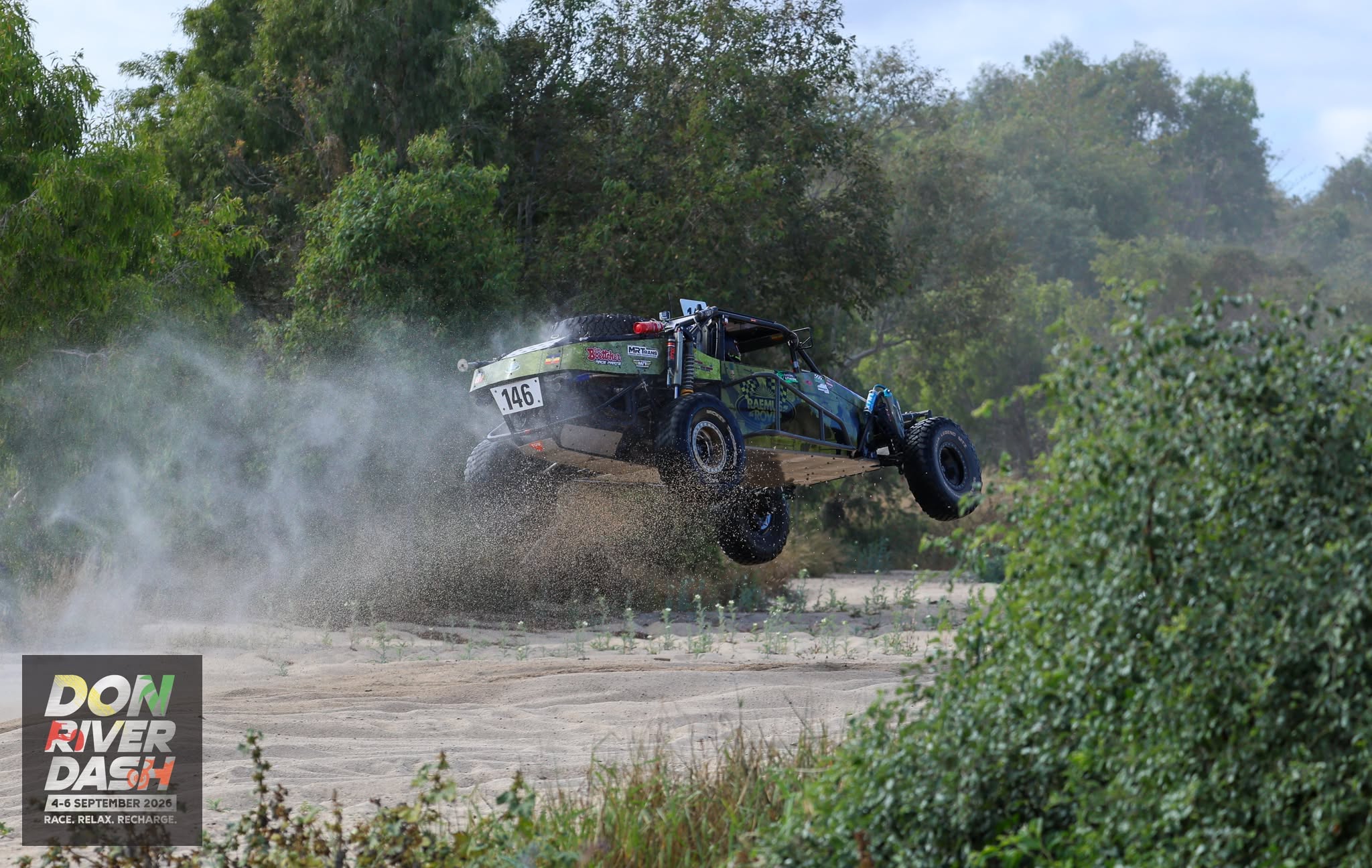
The day also got off to a terrific start thanks to Lamberts Fresh Produce, which supplied a fantastic breakfast pack to fuel the team for the action ahead. Follow RAEMUS Rover on Facebook for more photographs and stories from the weekend and visit the Don River Dash Facebook page for further event coverage.
After running such an absolute cracker of a veteran program, we went into the 2026 Don River Dash full of confidence. The track was the wettest since we started the race 7 years ago, but still a great challenge. Unfortunately on Day 1 we suffered a component failure ( a steering arm bolt snapped) this resulted in the dreaded tractor tow out of the river.
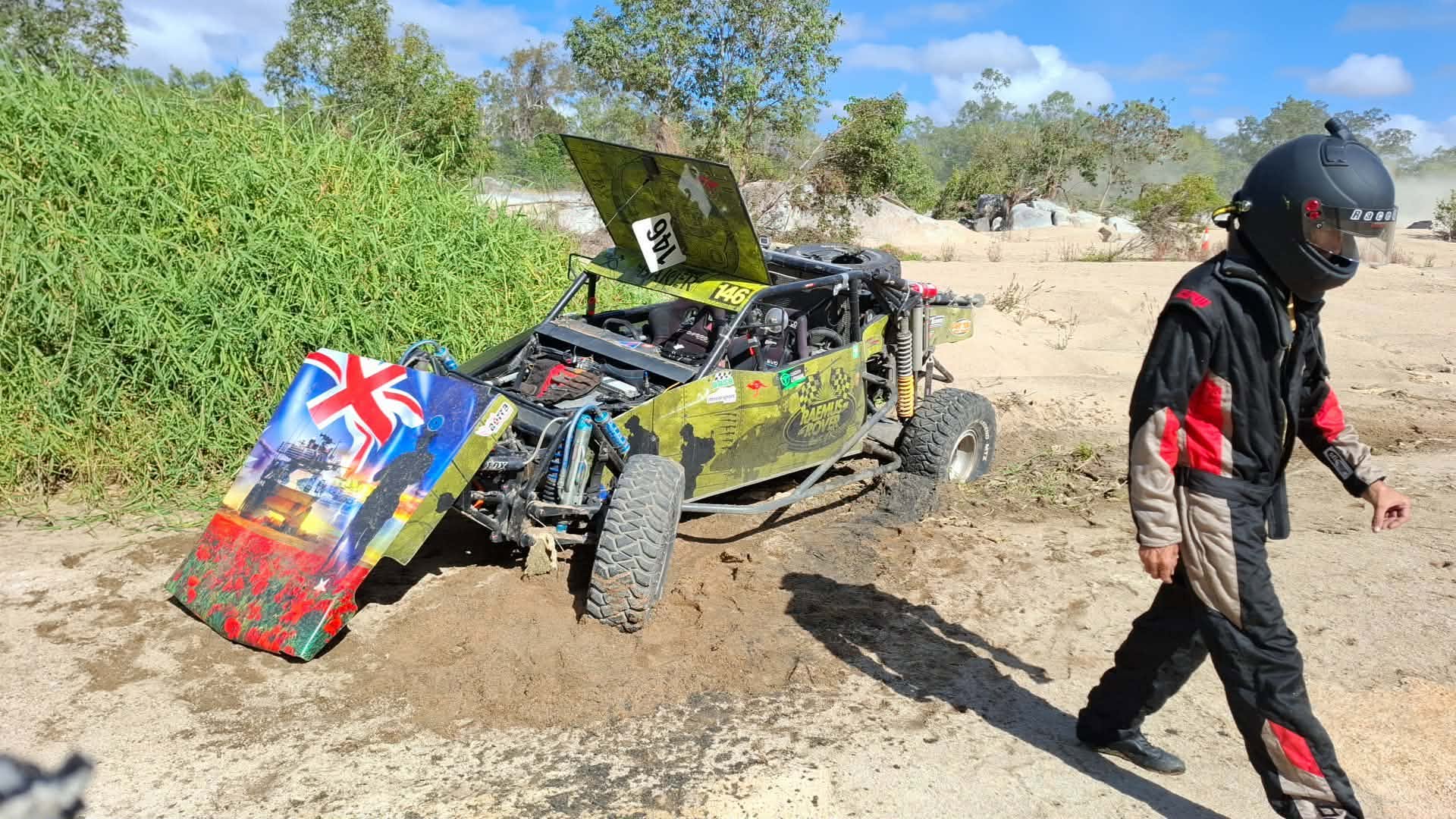
Day 2 all repaired we again faced the challenge, after getting out of the blocks really well, we bogged ( nearly 80% of the field were bogged at some stage ) at the 23km point, got free'd and continued on. The cars truck and buggies had the predicted effect of changing the track surface every lap, this time at the same region of the track we had to slow whilst crossing a creek flow to avoid hitting a slowed vehicle ( some vehicles really slowed during the crossings ), the wall of water was deep and we ended up stopped sideway in the crossing, not good. We managed to move the car to the edge but she gave her last gasp as we injested too much water into the engine and it's now locked solid. We bent the 2GR, aaaargh, we love that engine.
On the plus side we managed to get veteran Camaron Carroll a race to remember, he focussed on getting his health better to be able to endure the race and he did an awesome job as navigator. To the whole Raemus Rover Off-Road Racing team who supported the car and veteran program a massive thank you.
We will rebuild and be ready for 2027 season.
Article adapted courtesy of information and photographs supplied by RAEMEUS Rover
Operation Spanner Pack - A little piece of home
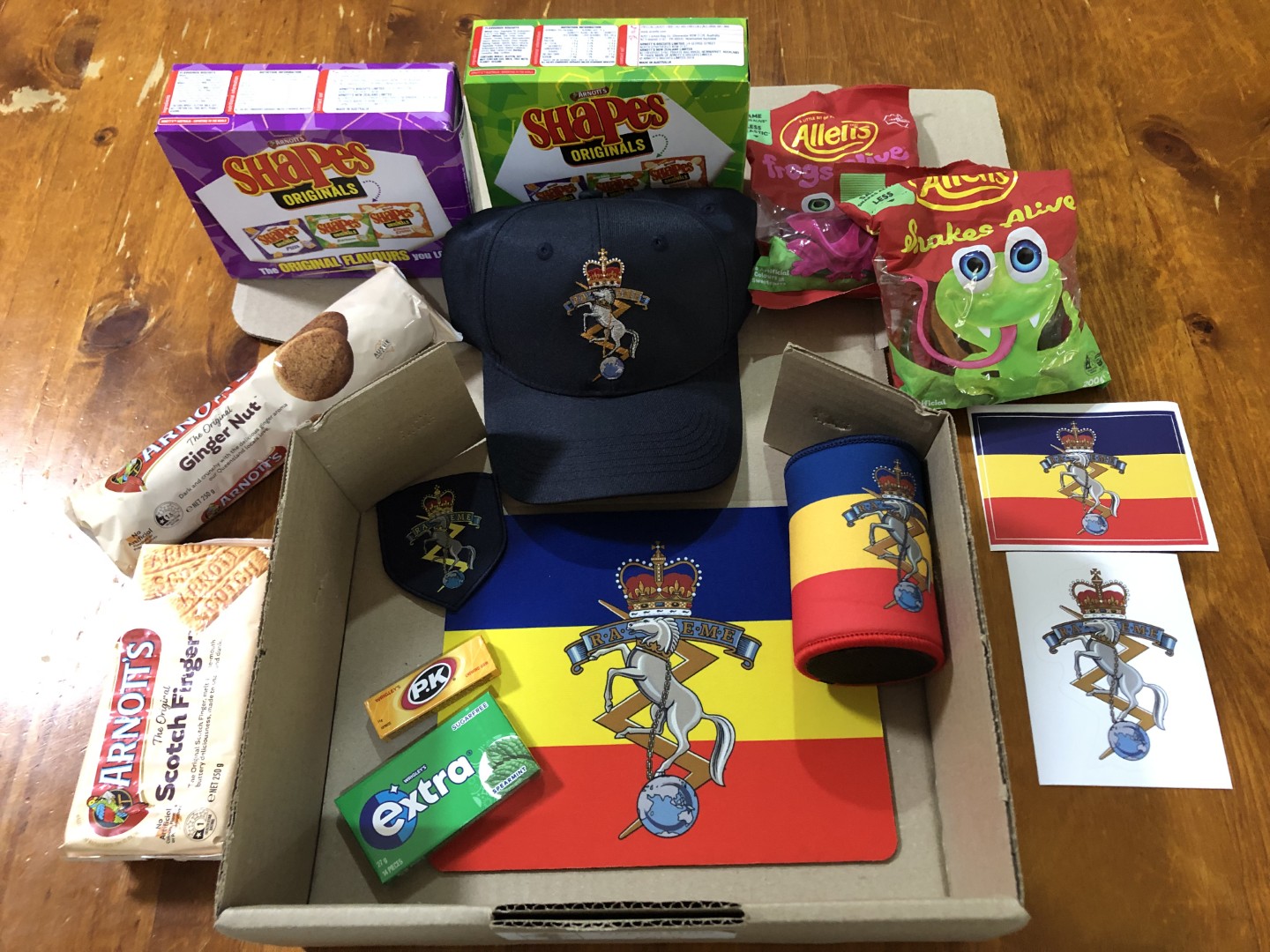
Operation Spanner Pack provides care packages, not tools, to RAEME members serving on operations, posted overseas or undertaking long-term training away from their usual support networks.
Administered by the RAEME Association Queensland (RAQ) on behalf of the RAEME National Network, the program sends familiar comforts and useful items that may not be supplied by Defence or readily available locally. Packs may include Australian snacks, biscuits, lollies, Vegemite and RAEME merchandise.
By the end of November 2025, the program had delivered 4,891 Spanner Packs, weighing more than 10 tonnes, to RAEME personnel serving across Australia and overseas.
Who can receive a pack?
The program supports RAEME members who are deployed on operations, posted overseas, undertaking long-term training or engagement activities, or embedded with another organisation or partner force.
Operation Spanner Pack is not state, trade or unit specific. Members can request a pack themselves, while commanders, colleagues, family members and friends are encouraged to nominate eligible RAEME personnel.
There is no lifetime limit on receiving Spanner Packs. If you received a pack during a previous deployment or posting, you are still entitled to receive another during your current or any future deployment. For longer deployments, we would also like to send you a second pack during the deployment.
Deployed? We want to hear from you
If you are deployed or serving away from your usual support network, don’t be shy about asking for a Spanner Pack, we genuinely want to hear from you.
You are not taking a pack away from somebody else. The purpose of the program is to support RAEME members like you and remind you that the Corps family is thinking of you.
To request a pack or nominate someone, contact:
MAJ (Retd) Tom Cross
Spanner Pack Coordinator
Please provide the member’s rank and name, unit, activity, location, expected duration and an appropriate contact or postal arrangement. Operational security must always be maintained.
Help us send the next pack
Operation Spanner Pack relies on the generosity of the wider RAEME community. Individuals and businesses can support the program through financial donations, commercial sponsorship, suitable products or introductions to potential sponsors.
For information about donating or otherwise supporting the program, visit:
Every contribution helps remind another deployed RAEME member that the Corps family remembers them and stands firmly behind them.
Arte et Marte