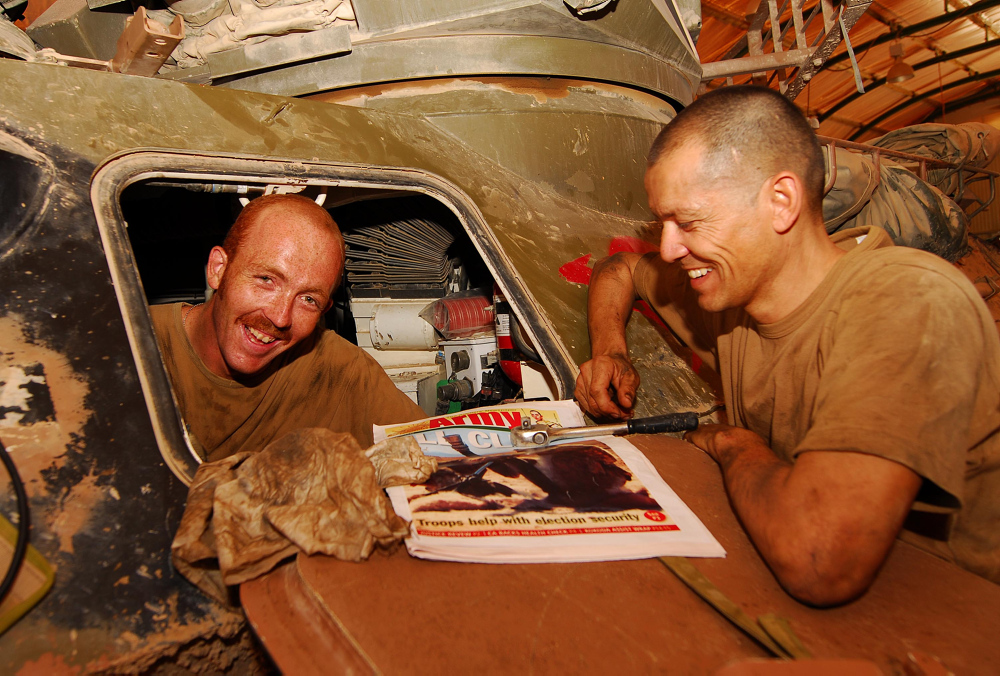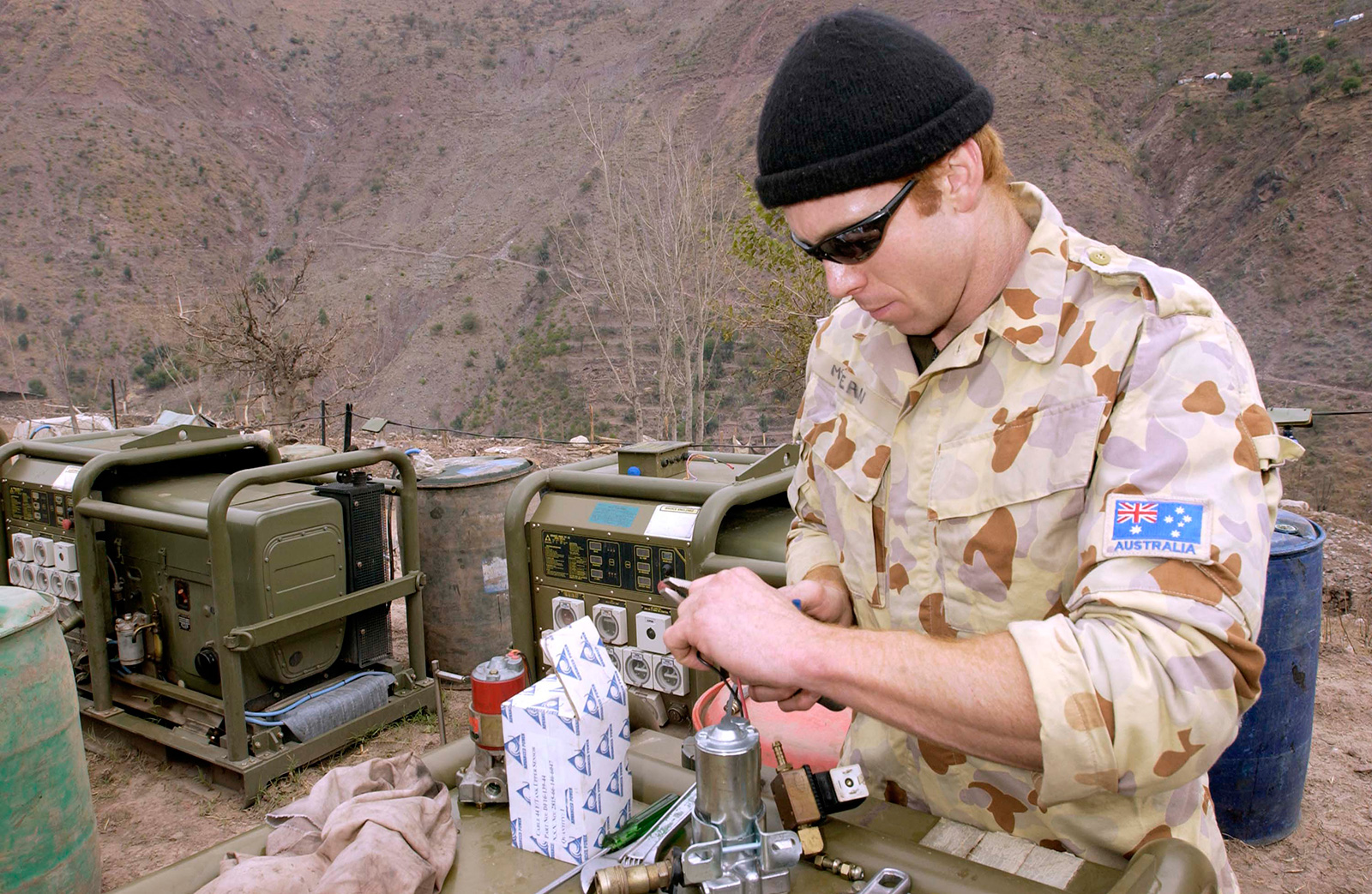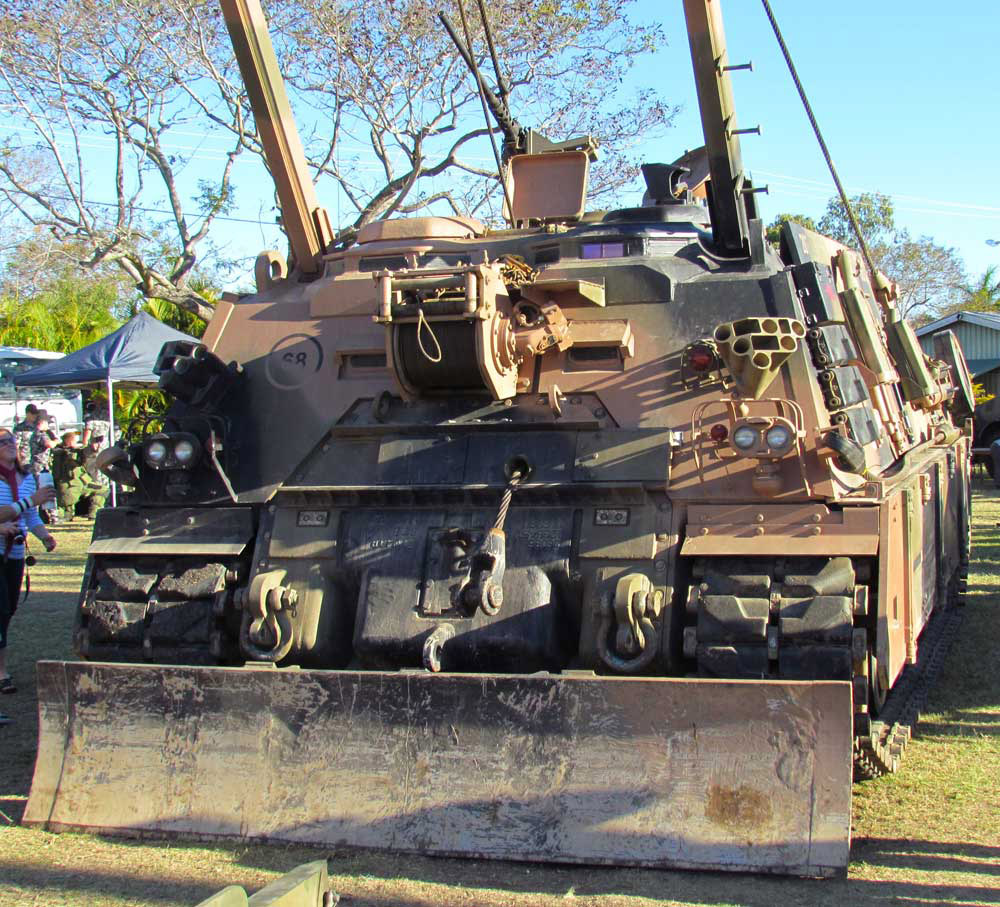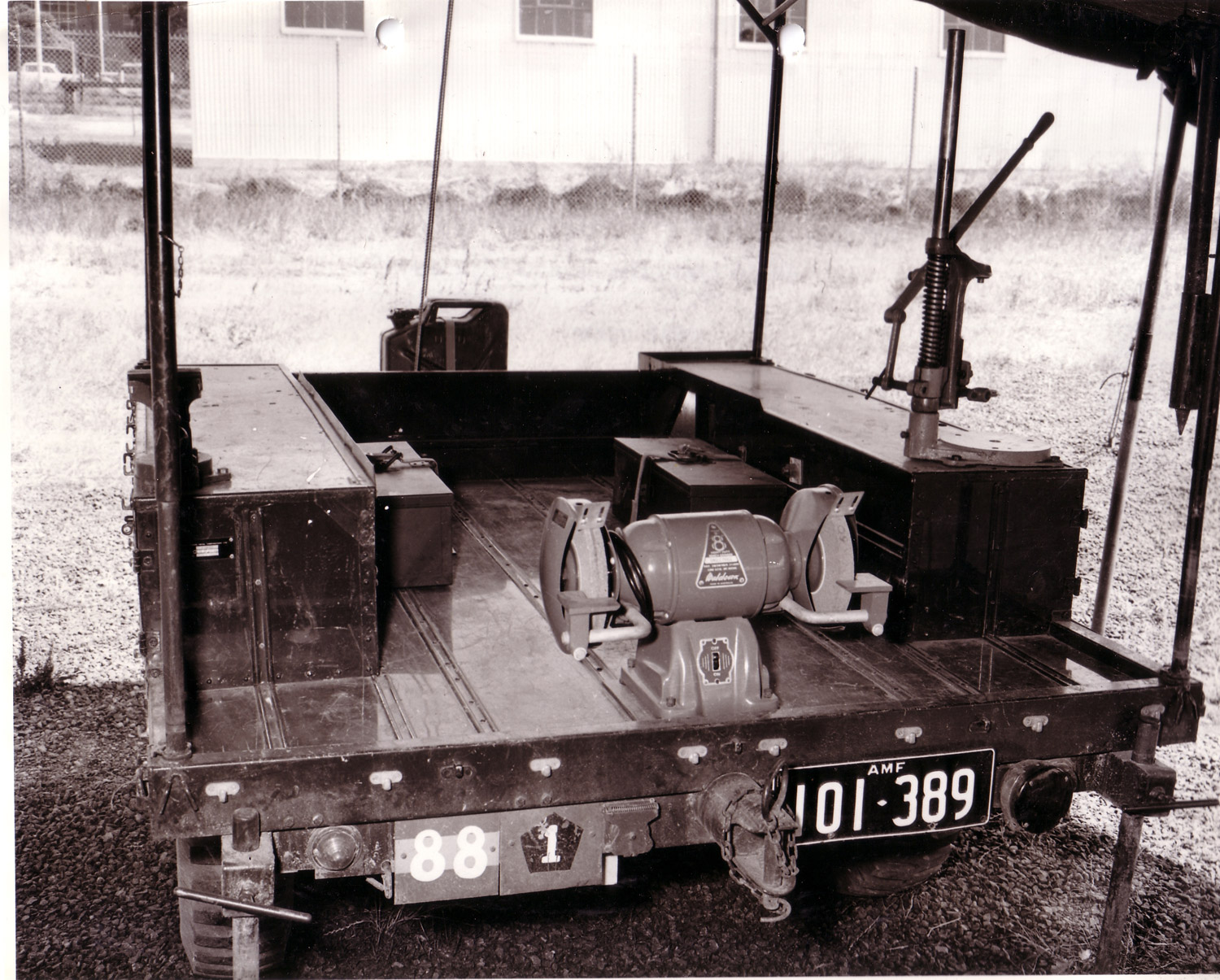


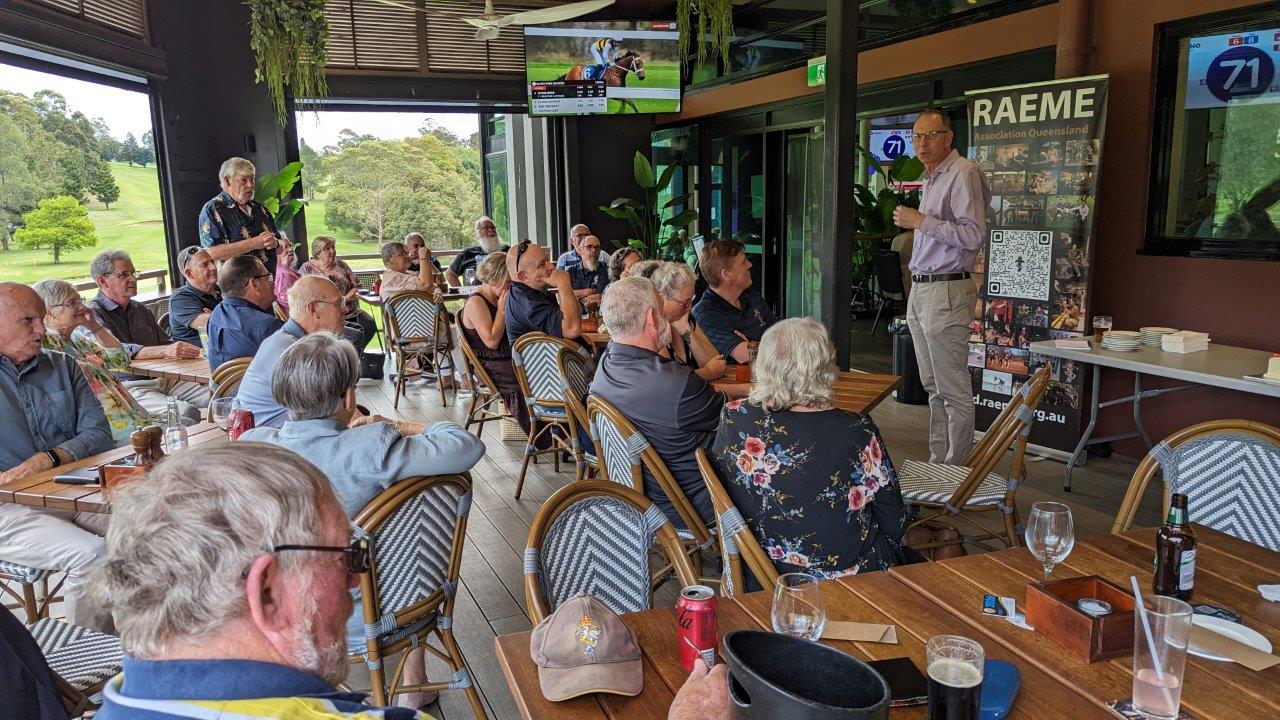
Join the RAEME Association Darling Downs for its final luncheon of the year and an early celebration of the Corps Birthday!
Members, guests, families, partners and anyone associated with the Corps are warmly invited to the Ambrose Deck at the City Golf Club in Toowoomba. It’s a great opportunity to catch up with mates, celebrate our shared Corps connection and round out the year together.
City Golf Club membership is free and lasts for three years, offering discounts on meals and drinks, along with free tickets in the monthly car draw held on the last Sunday of each month.
- Date: Sunday 15 November 2026
- Time: 12.00 pm–4.00 pm
- Venue: Ambrose Deck, Toowoomba City Golf Club, 254 South Street, South Toowoomba
- Catering: Meals and drinks available at your own cost
- Dress: Casual
- RSVP:
This email address is being protected from spambots. You need JavaScript enabled to view it. - Organisers: Peter Pile and Clarrie Sanders
Further details will be published closer to the day.
Please pass on the invitation to anyone who would enjoy coming along. We look forward to seeing you there!
RAQ NQ end-of-year gathering – Saturday 12 December 2026
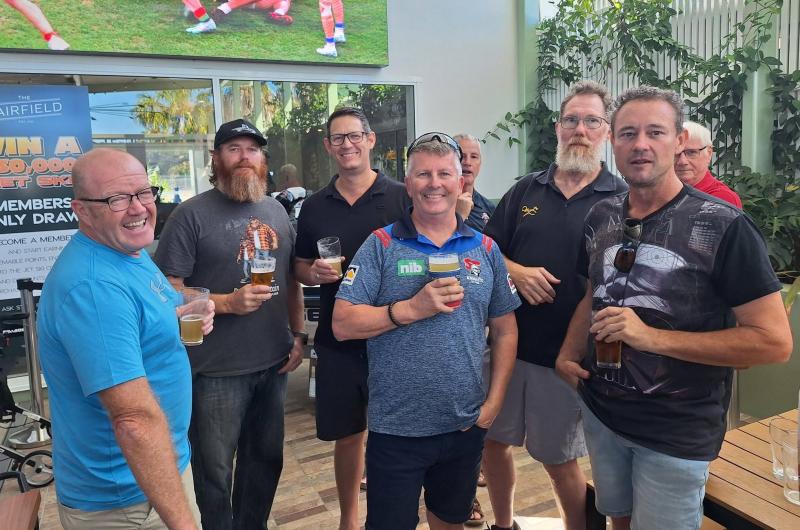
Above: Members and guests enjoying the September 2026 gathering
Join RAQ North Queensland for an end-of-year get-together at The Vale Hotel, with an afternoon of mateship, good company and Corps camaraderie.
All RAQ members, current and former RAEME members, and friends of the Corps are warmly invited. Those travelling from further afield are encouraged to make a weekend of it and enjoy some North Queensland hospitality.
- When: Saturday 12 December 2026, from 12.30 pm onwards
- Where: The Vale Hotel, 222 Ross River Road, Aitkenvale QLD 4814
- Venue phone: (07) 4779 0100
The afternoon will include a RAEME badge raffle, a $100 member draw and bar snacks from 1.30 pm. RAEME merchandise will also be available for purchase.
Come along, catch up with old mates, meet new friends and celebrate the end of the year—RAEME NQ style!
Enquiries:
Call for Contributions – The Craftsman 2026
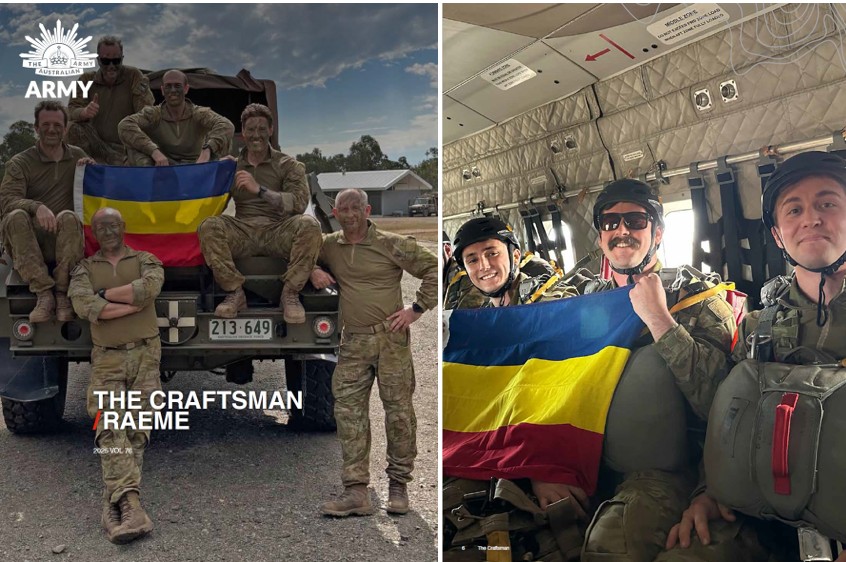
RAEME units and associations are invited to begin preparing articles for the 2026 edition of The Craftsman.
OCs, ASMs and Association Presidents are encouraged to identify members who can share their unit’s or association’s activities, achievements and highlights from 2026.
Articles should be submitted to
Photographs may be embedded in the Word document, but the original image files must also be submitted separately to ensure the publisher receives high-resolution copies. Please do not submit photographs copied from other publications or the internet.
The electronic 2025 edition of The Craftsman is availalbe here.
Operation Spanner Pack - A little piece of home
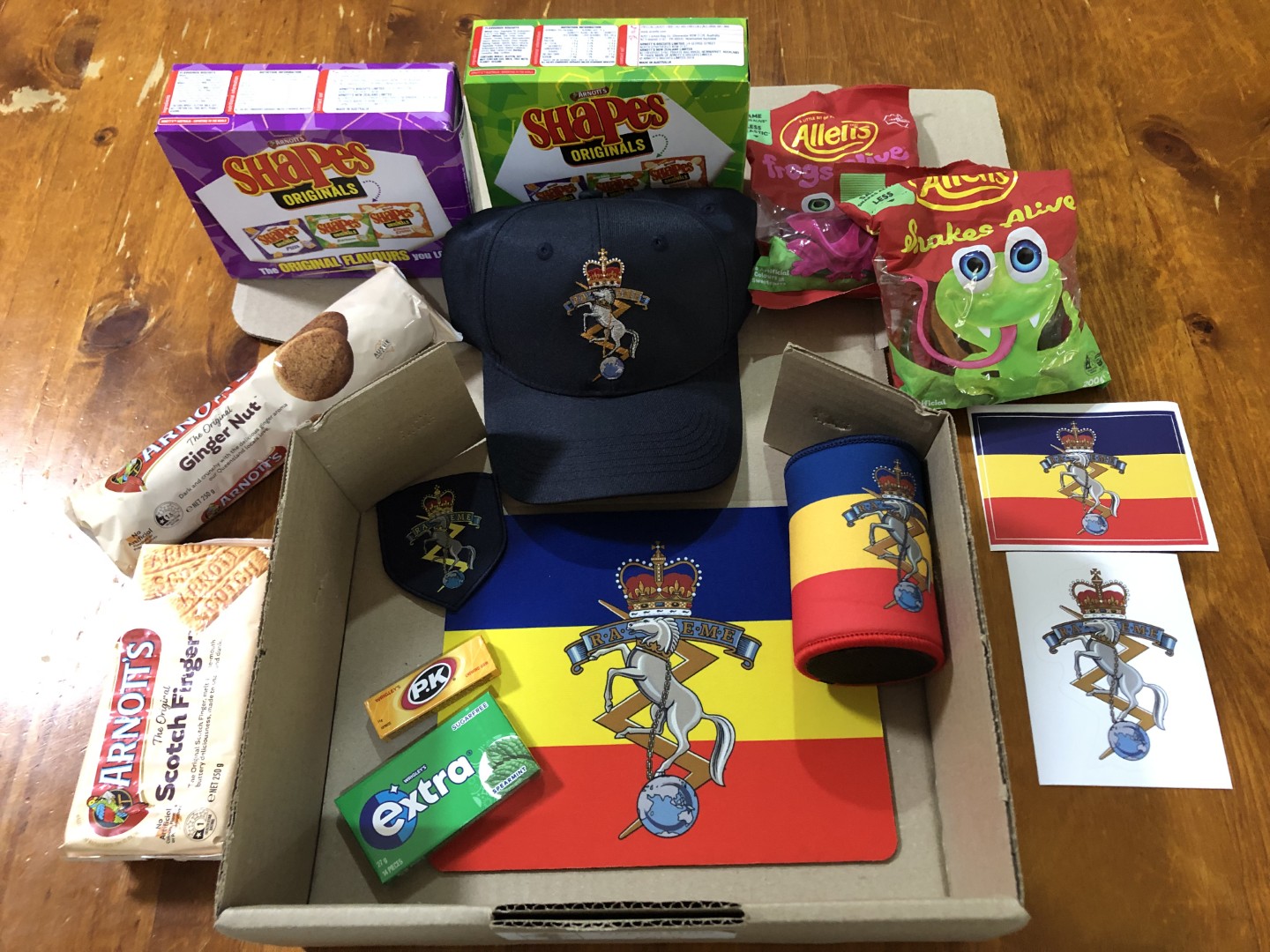
Operation Spanner Pack provides care packages, not tools, to RAEME members serving on operations, posted overseas or undertaking long-term training away from their usual support networks.
Administered by the RAEME Association Queensland (RAQ) on behalf of the RAEME National Network, the program sends familiar comforts and useful items that may not be supplied by Defence or readily available locally. Packs may include Australian snacks, biscuits, lollies, Vegemite and RAEME merchandise.
As of the end of August 2026, Operation Spanner Pack has provided 4914 Spanner Packs, weighing 10,109 kg to RAEME personnel serving on operations.
The program supports RAEME members who are deployed on operations, posted overseas, undertaking long-term training or engagement activities, or embedded with another organisation or partner force.
Operation Spanner Pack is not state, trade or unit specific. Members can request a pack themselves, while commanders, colleagues, family members and friends are encouraged to nominate eligible RAEME personnel.
There is no lifetime limit on receiving Spanner Packs. If you received a pack during a previous deployment or posting, you are still entitled to receive another during your current or any future deployment. For longer deployments, we would also like to send you a second pack during the deployment.
If you are deployed or serving away from your usual support network, don’t be shy about asking for a Spanner Pack, we genuinely want to hear from you.
You are not taking a pack away from somebody else. The purpose of the program is to support RAEME members like you and remind you that the Corps family is thinking of you.
To request a pack or nominate someone, contact:
MAJ (Retd) Tom Cross
Spanner Pack Coordinator
Please provide the member’s rank and name, unit, activity, location, expected duration and an appropriate contact or postal arrangement. Operational security must always be maintained.
Operation Spanner Pack relies on the generosity of the wider RAEME community. Individuals and businesses can support the program through financial donations, commercial sponsorship, suitable products or introductions to potential sponsors.
For information about donating or otherwise supporting the program, visit:
Every contribution helps remind another deployed RAEME member that the Corps family remembers them and stands firmly behind them.
Arte et Marte
2026 Craftsman Series - Ordering deadline extended to 31 October 2026
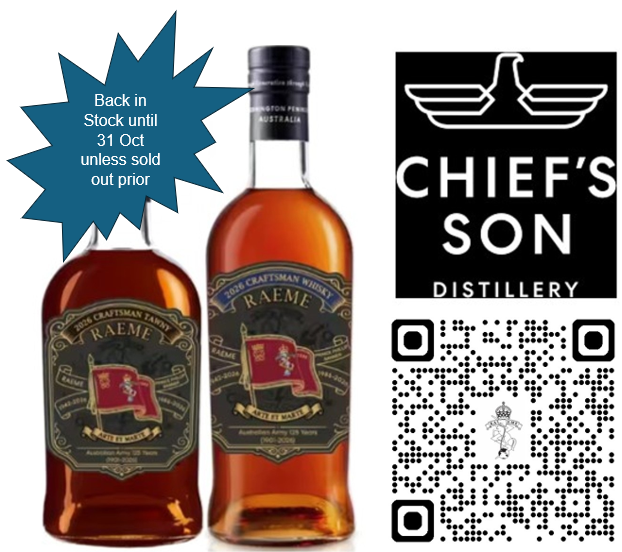
The 2026 RAEME Craftsman Series, featuring this year’s commemorative Craftsman Port (Tawny) and Single Malt Whisky, is available to purchase.
In recognition of several significant milestones within both the Australian Army and the Corps, Army Headquarters (AHQ) has proudly sponsored this year’s release in partnership with Chief’s Son Distillery, a proudly Australian veteran-owned business renowned for its premium handcrafted spirits.
The 2026 Craftsman Series commemorates:
- 125 years of the Australian Army
- 84 years of the Royal Australian Electrical and Mechanical Engineers
- 40 years of the Prince Philip Banner
This special release honours the dedication, professionalism, and enduring legacy of RAEME soldiers past and present, while celebrating the proud history and traditions of the Corps.
Special recognition should also go to WO1 Marcellin Chee and WO1 Marc Craigie, who have been instrumental in driving and coordinating this year’s release. Their work behind the scenes has helped bring together a fitting commemorative product that reflects the heritage, pride, and craftsmanship of the Corps.
Produced in collaboration with Chief’s Son Distillery, the Craftsman Series offers members and supporters an opportunity to secure a unique commemorative item while also supporting an Australian veteran-owned business.
Product Details
- 700 ml Craftsman Port (Tawny) – $60.00 - Available
- 700 ml Single Malt Whisky – $87.00 - Available
- Postage – $19 (up to 6 bottles)
-
PLEASE NOTE – Maximum purchase of six bottles per order, in any combination.
Delivery will occur in batches throughout 2026.
How to Order
To place an order, please scan the QR code or click on this link.
All orders will be delivered directly to your door.
Orders are now open, with final orders closing on 31 October unless sold out sooner.
This release provides a unique opportunity to secure a high-quality commemorative product while supporting a veteran-owned Australian distillery and celebrating the enduring heritage of the Corps.
Chief of Army Symposium ‘Hardwired for Adaptation’ - Perth
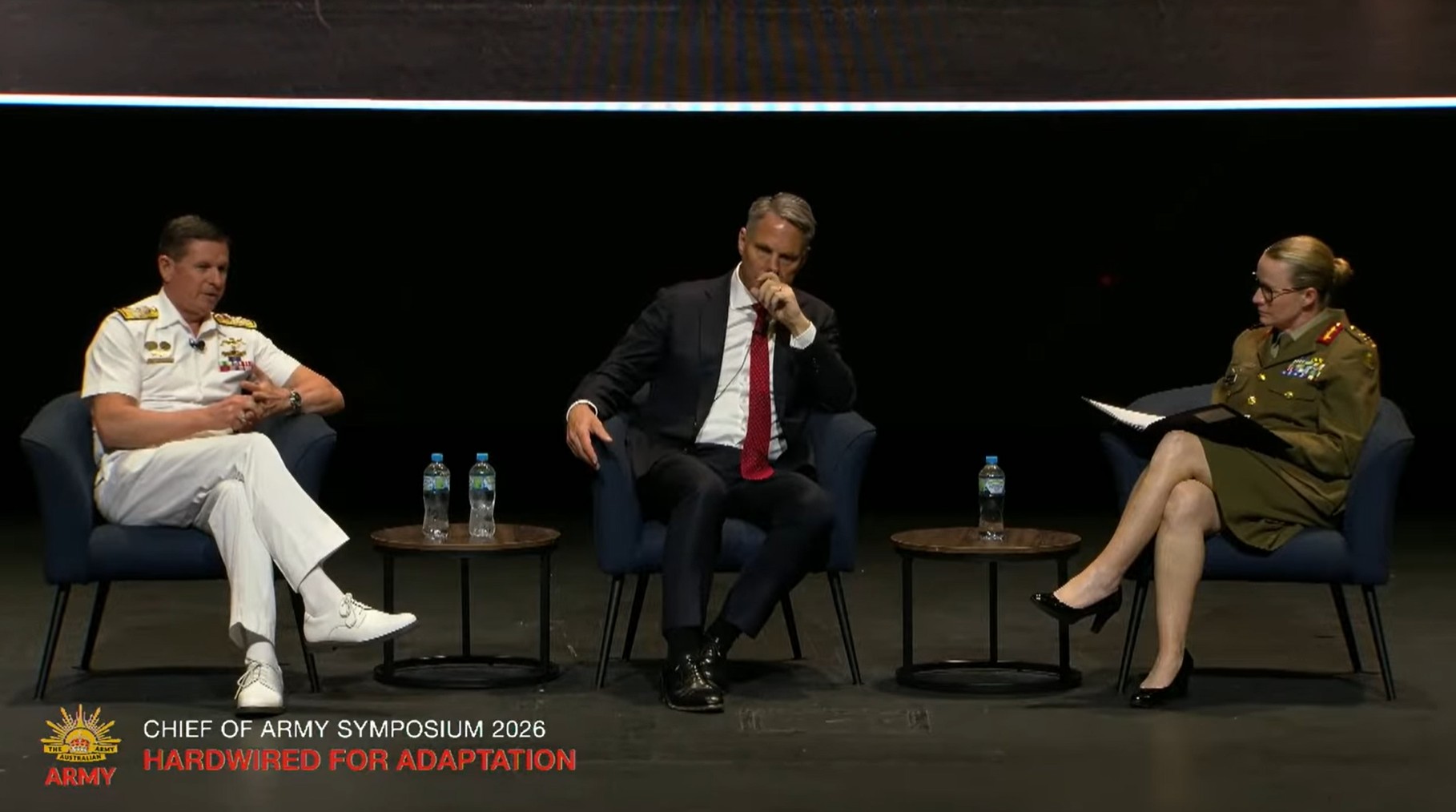
Above: From left: Admiral Mark Hammond, AO, RAN, Chief of the Defence Force; the Hon. Richard Marles MP, Acting Prime Minister; and Lieutenant General Susan Coyle, AM, CSC, DSM, Chief of Army, during the symposium’s fireside chat on Wednesday 7 October 2026. Click on the image to view.
The Chief of Army Symposium 2026 (CAS 2026), the Australian Army’s premier annual event, was held in conjunction with the Land Forces 2026 International Land Defence Exposition on 7–8 October at the Perth Convention and Exhibition Centre.
The event brought together representatives from defence, industry, academia and government, alongside international military leaders from more than 20 nations, to examine the changing character of war.
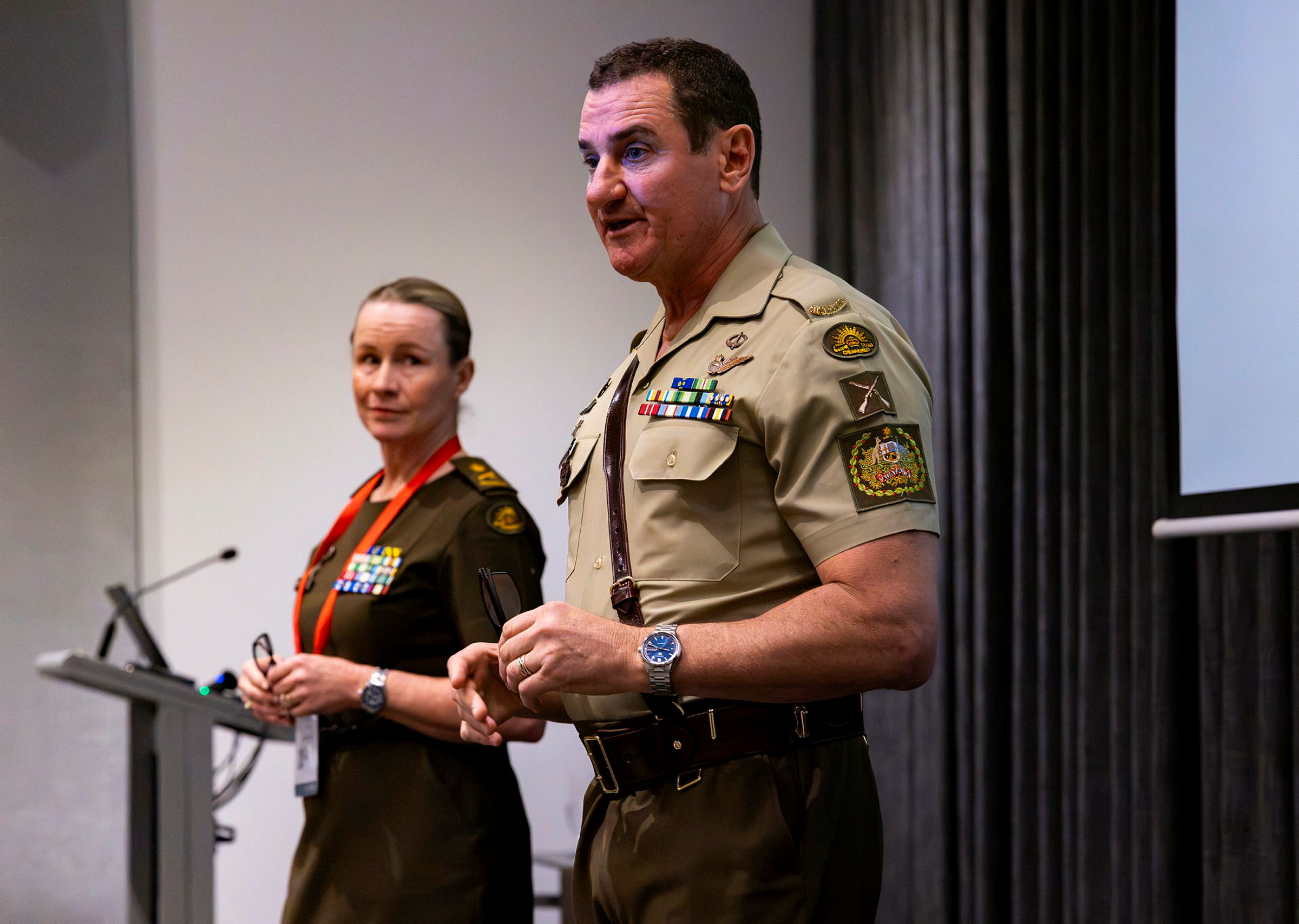
Above: Regimental Sergeant Major-Army, Warrant Officer Bradley Doyle OAM,and Chief of Army, Lieutenant General Susan Coyle AM CSC DSM answers questions during the Junior Leadership Fellowship as part of the Chief of Army Symposium 2026.
Under the theme ‘Hardwired for Adaptation’, presenters explored how Army must embed continual adaptation across its roles as a profession, a fighting force and a national institution. Discussions moved beyond theory to address the practical realities of professional culture, foresight, force design, funding and industry collaboration.
The programme included a fireside chat featuring the Hon. Richard Marles MP, Acting Prime Minister; Admiral Mark Hammond, AO, RAN, Chief of the Defence Force; and Lieutenant General Susan Coyle, AM, CSC, DSM, Chief of Army.
For the RAEME community, the theme resonates strongly. Technical ingenuity, practical problem-solving and the ability to sustain equipment in changing conditions remain central to the Corps’ contribution. These skills will continue to play an essential role as Army adapts to future operational demands.
Article adapted from information and photographs supplied by Defence.